2028 Lexus LBX Morizo RR Price, Specs, Dimensions
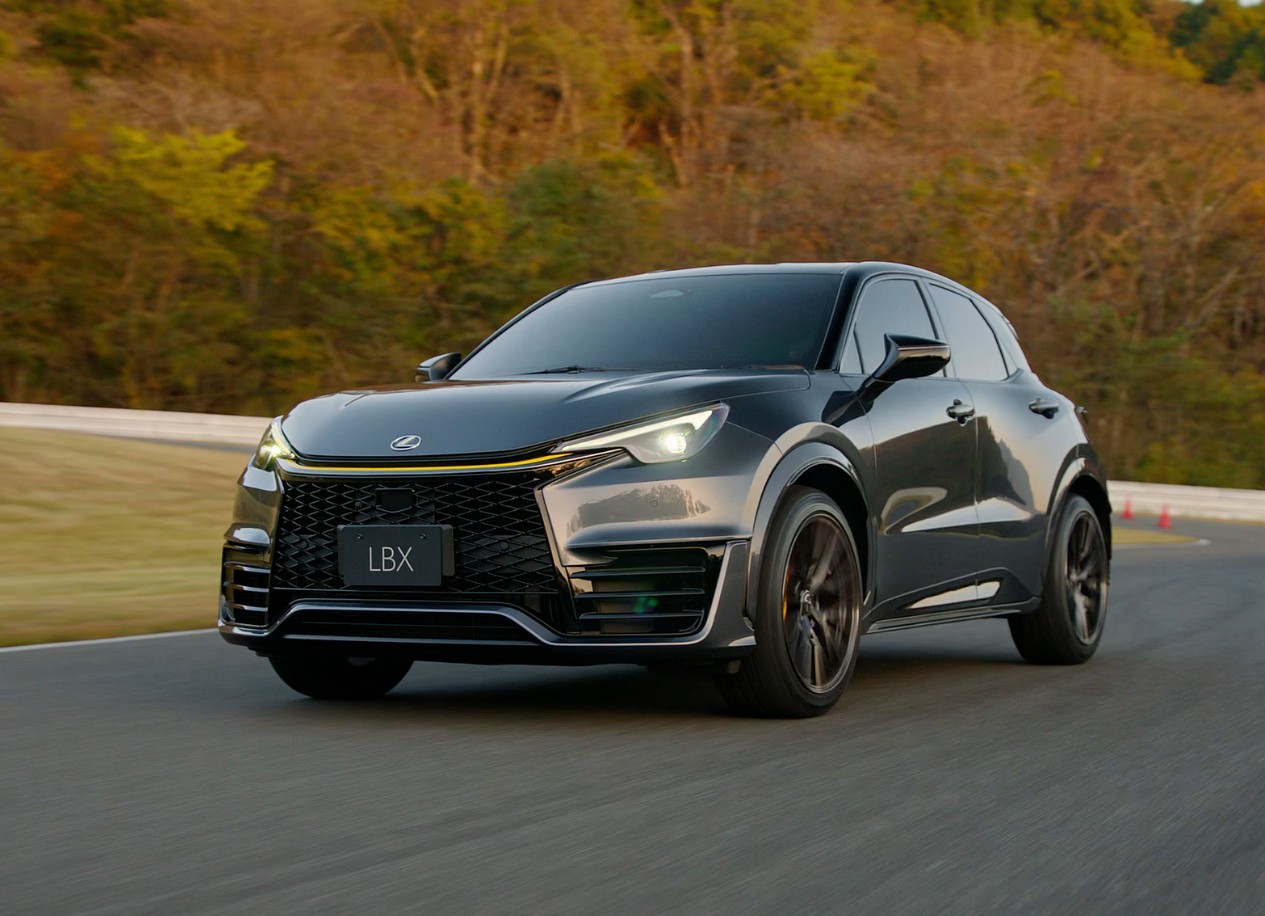
The 2028 Lexus LBX Morizo RR represents an especially interesting direction for Lexus because the Morizo RR takes a small premium crossover and gives it the hardware normally associated with Toyota Gazoo Racing performance cars. The production LBX Morizo RR arrived in Japan in 2024 after debuting as a concept at the 2024 Tokyo Auto Salon, with development involving Akio Toyoda, better known by his driver name, Morizo. Instead of treating the LBX as simply a stylish urban luxury crossover, Lexus transformed it around a 1.6-liter turbocharged three-cylinder engine, electronically controlled AWD, upgraded suspension, larger brakes and performance-focused bodywork.
The current Morizo RR is already a remarkably serious machine for its size. Its G16E-GTS engine produces 304 PS, equivalent to approximately 300 horsepower, and 400 Nm of torque. Power reaches all four wheels through either a Direct Shift eight-speed automatic transmission or a six-speed intelligent manual transmission, giving buyers a choice between rapid automatic shifts and a more traditional driver-controlled experience. Lexus quotes an internally measured 0–100 km/h time of 5.2 seconds for both transmissions. At only around 1,440 kg in manual form or 1,470 kg with the automatic, the compact crossover has a very strong power-to-weight ratio.
For 2028, the important point is that Lexus has not officially announced a separate 2028-generation LBX Morizo RR. The model did receive an update in May 2026, adding the Neutrino Gray and Black exterior combination, an Ochre interior option, a revised 17-speaker Mark Levinson Premium Surround Sound System with enhanced Active Sound Control, and expanded Lexus Safety System+ functions. Therefore, any discussion of a 2028 model should separate confirmed equipment from future projections. A likely 2028 direction would be an evolutionary improvement rather than an entirely new vehicle, unless Lexus decides to introduce a more substantial LBX redesign before then.
That uncertainty does not make the 2028 Lexus LBX Morizo RR less interesting. Quite the opposite: the current car provides an unusually strong foundation for a future performance update. The combination of compact dimensions, 304 PS, 400 Nm, full-time electronically controlled AWD, a double-wishbone rear suspension and optional manual transmission gives Lexus considerable room to refine the package without changing its fundamental personality. A future version could focus on chassis calibration, infotainment, braking feel, aerodynamic efficiency, driver assistance and cabin technology while preserving the compact, aggressive formula that makes the Morizo RR so distinctive. 2028 Lexus LBX Morizo RR Price
2028 Lexus LBX Morizo RR Redesign and Update Plan
Exterior & Interior
The exterior of the LBX Morizo RR is deliberately more aggressive than the standard LBX. Lexus widened the vehicle relative to the hybrid LBX and lowered its overall height, while the performance variant uses 19-inch wheels with 235/45R19 tires. The body receives dedicated front bumper and grille treatment, colored fender and rocker moldings, black exterior details and performance-oriented aerodynamic components. The yellow accents associated with the Morizo identity are particularly recognizable, appearing on selected exterior details and reinforcing the connection between the road car and the motorsport-inspired development philosophy behind it.
The wheels and tires are particularly important because the Morizo RR’s performance is not created by engine output alone. The 235/45R19 tire specification gives the compact crossover a substantial contact patch for its dimensions, while the low-profile rubber supports steering response and lateral grip. A future 2028 model could introduce lighter forged wheels as standard or offer them through a performance package. There may also be room for an upgraded tire compound designed specifically for enthusiastic road driving. However, Lexus would need to balance grip against ride comfort because the LBX remains a compact luxury crossover intended for everyday use rather than an uncompromising track car.
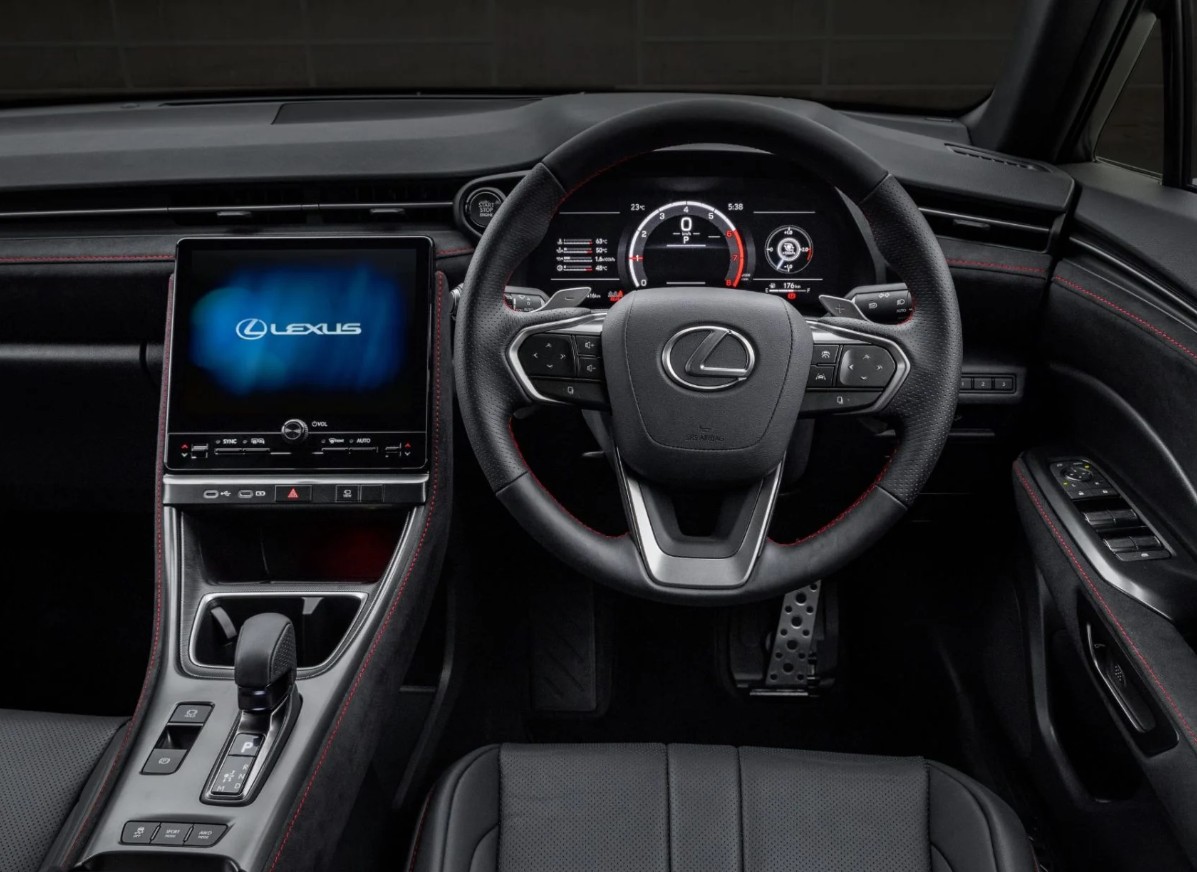
Inside, the current Morizo RR takes a driver-focused approach without abandoning Lexus’s premium character. The cabin features dedicated sport-oriented seats, alloy pedals, performance instrumentation and Morizo-specific details. The interior can be configured with contrasting colors, while the 2026 update added Ochre as an available interior color. Lexus has also expanded the Mark Levinson system to 17 speakers and improved Active Sound Control, giving the compact performance crossover a more immersive acoustic environment. That matters because engine sound is part of the Morizo RR experience, particularly with a high-revving turbocharged three-cylinder engine.
A 2028 cabin could become significantly more sophisticated while retaining the physical controls that enthusiasts appreciate. A larger high-resolution central display, improved navigation, wireless smartphone connectivity, a configurable digital instrument cluster and more advanced voice controls would make sense. The seats could receive additional lateral support, while materials such as Ultrasuede, leather, synthetic suede and carbon-look trim could create a stronger performance atmosphere. A numbered plaque or Morizo RR-specific identification package would also add appeal to higher-specification versions. The best interior would be one where technology supports the driver rather than covering the dashboard with screens that distract from the mechanical character of the car.
A 2028 Lexus LBX Morizo RR would not need a radical visual redesign to remain competitive. The existing model already has a wider and lower stance than the standard LBX, with its body stretched to 4,190 mm in length, 1,840 mm in width and 1,535 mm in height. The wider body, lower roofline and performance-oriented suspension give the car a more planted appearance. Lexus could therefore concentrate on detail changes, including a revised spindle-style grille treatment, sharper LED lighting, redesigned aerodynamic elements and additional cooling openings. The objective would be to make the Morizo RR look more purposeful without losing the compact proportions that define the LBX.
Aerodynamics could become one of the most important areas for a future update. The original Morizo RR concept used aerodynamic development influenced by high-speed air-racing technology, showing that Lexus did not approach the model as a simple cosmetic package. A 2028 version could further develop this idea through a reshaped front splitter, revised underbody panels, more efficient wheel-arch airflow and a redesigned rear diffuser. Active aerodynamic components would be possible, although adding complexity to such a compact vehicle would need to produce a meaningful performance benefit. A fixed, functional aerodynamic package may actually fit the character of the Morizo RR better than expensive systems designed primarily for visual impact.
The suspension would be another natural area for refinement. The current Morizo RR uses MacPherson struts at the front and a double-wishbone setup at the rear, with performance development carried out with racing-driver input. For 2028, Lexus could introduce revised dampers, stronger bushings, sharper steering calibration and more sophisticated electronic control of the AWD system. A future version might also receive a revised limited-slip differential strategy or additional drive modes that alter throttle response, transmission behavior, steering weight and torque distribution. These changes could make the car more adaptable without compromising the direct connection that makes a small performance vehicle enjoyable on ordinary roads.
Inside the technology package, a 2028 update would likely be more noticeable. The May 2026 revision already improved the premium audio system and expanded safety technology, so future development could build on that foundation with a newer infotainment interface, faster processors, improved smartphone connectivity, digital-key functions and more advanced connected services. The driver display could also provide more performance information, including boost pressure, torque distribution, oil temperature, transmission temperature and selectable performance gauges. Such features would make the cabin more useful for enthusiastic driving while retaining Lexus comfort and refinement.
2028 Lexus LBX Morizo RR Specs
Engine & Performance
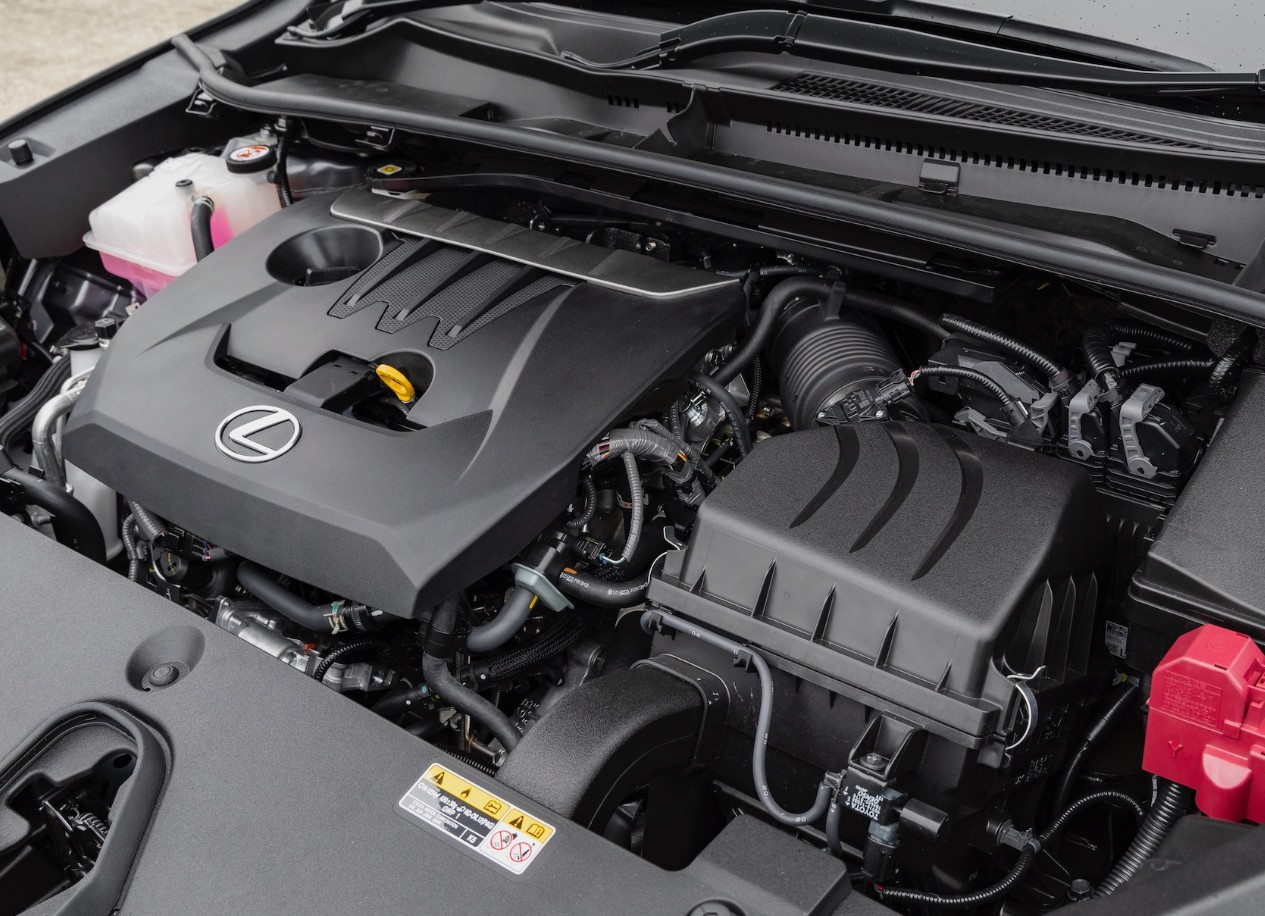
The most important component of the Lexus LBX Morizo RR is its G16E-GTS engine. This 1.618-liter inline three-cylinder uses turbocharging and intercooling to generate 304 PS at 6,500 rpm and 400 Nm between 3,250 and 4,600 rpm. The engine is related to the high-performance powertrain philosophy developed within Toyota Gazoo Racing, and Lexus specifically developed the Morizo RR around the idea of extracting meaningful performance from a compact package. The engine uses direct and port fuel injection, variable valve timing and premium gasoline, while the 50-liter fuel tank gives the small crossover reasonable touring capability despite its performance-oriented consumption.
Transmission choice is one of the Morizo RR’s biggest strengths. The Direct Shift eight-speed automatic provides fast gear changes and makes the car easier to use in traffic, while the six-speed iMT gives drivers a clutch pedal and manual gear selection. Both configurations send power through electronically controlled AWD. Lexus quotes an internally measured 0–100 km/h time of 5.2 seconds for both versions, which is remarkable considering the vehicle’s compact dimensions. The manual version is also lighter at approximately 1,440 kg, compared with around 1,470 kg for the automatic. This weight difference helps explain why the manual remains a compelling choice for enthusiasts. 2028 Lexus LBX Morizo RR Price
2028 Lexus LBX Morizo RR Fuel Economy
Fuel economy remains the unavoidable compromise. Official Japanese figures list WLTC fuel consumption at 10.7 km/L for the automatic and 12.5 km/L for the six-speed manual. The corresponding city-cycle figures are 7.1 and 9.2 km/L, while highway-cycle figures reach 13.2 and 14.5 km/L respectively. These numbers are respectable considering the output and AWD system, but they are nowhere near the efficiency of the standard hybrid LBX. That distinction is important: the Morizo RR is engineered for performance first. A future 2028 version could improve efficiency through engine-management revisions, lower-friction components, improved thermal management and smarter AWD control, but a major increase would require more substantial powertrain changes.
2028 Lexus LBX Morizo RR Safety Features
Safety technology is another area where the 2028 model could move forward. The current LBX Morizo RR includes Lexus Safety System+ technology, with features such as pre-collision assistance and radar cruise control, while the 2026 update expanded preventive-safety functionality. Lexus documentation also identifies systems involving driver monitoring and additional assistance functions, although exact availability can vary by transmission and configuration. A future model could add more sophisticated intersection assistance, improved cyclist and motorcycle detection, enhanced lane-centering behavior, expanded blind-spot monitoring, safer door-exit assistance and more advanced parking support. Performance should never come at the expense of predictable driver assistance, especially in a vehicle capable of reaching high speeds quickly.
2028 Lexus LBX Morizo RR Release Date & Price
The release date is the most uncertain part of the 2028 Lexus LBX Morizo RR story. Lexus released the original production Morizo RR in 2024 and introduced a meaningful update in May 2026, so another update around the 2028 model year is technically plausible. However, Lexus has not announced a specific 2028 model-year launch schedule or confirmed a next-generation Morizo RR. If the current generation remains in production, a 2028 version could logically arrive through another equipment update rather than a complete redesign. A more substantial replacement would depend on Lexus’s broader LBX product cycle and its decisions regarding future performance powertrains.
The current Lexus LBX Morizo RR lineup is relatively simple compared with many luxury crossovers. In Japan, buyers can choose the standard Morizo RR or the more extensively configurable Morizo RR “Bespoke Build.” Both versions can be paired with the eight-speed automatic or six-speed iMT, and both use electronically controlled AWD. Lexus’s current Japanese pricing lists the standard Morizo RR from ¥6.8 million and the Bespoke Build from ¥7.56 million, including Japanese consumption tax. Those prices provide a useful reference point for understanding where the performance LBX sits in the Lexus range, although they should not be converted directly into another market’s MSRP because taxes, equipment, import costs and distribution structures differ.
The Bespoke Build is particularly relevant to the Morizo RR’s appeal because Lexus designed it to allow customers to create a more individualized performance crossover. Earlier versions included special combinations and options such as yellow brake calipers, while limited versions added additional Morizo-specific details. Lexus also introduced the Morizo RR Original Edition, a special 100-unit model that carried a ¥7.3 million Japanese MSRP when announced. These limited variants demonstrate that Lexus sees the Morizo RR as more than a normal trim level; it is a performance-focused lifestyle model with enough personality to support collector-oriented specifications.
For a hypothetical 2028 lineup, the most logical structure would retain a standard Morizo RR and a premium Bespoke Build rather than multiplying the number of trims. A potential entry model could remain focused on performance equipment, while the Bespoke Build could add upgraded wheels, premium interior materials, special paint, enhanced audio, additional carbon-fiber components and exclusive Morizo details. If Lexus introduces another limited edition, a numbered production run could sit above the Bespoke Build. Projected pricing would likely rise from the current Japanese levels as equipment and technology develop, but there is no official 2028 MSRP at this stage. Any specific future price should therefore be treated as an estimate rather than a confirmed Lexus figure.
Conclusion
The 2028 Lexus LBX Morizo RR has the ingredients to remain one of the most unusual performance crossovers on the market. The current model already combines 304 PS, 400 Nm, electronically controlled AWD, a six-speed manual option, an eight-speed automatic, 19-inch performance tires and a chassis developed with serious attention to driver engagement. Few premium compact crossovers offer such a direct connection between a motorsport-derived powertrain and an everyday luxury format.
The biggest opportunity for a 2028 update would not necessarily be a huge horsepower increase. More meaningful improvements could come from sharper AWD calibration, lighter wheels, stronger brakes, improved suspension tuning, more sophisticated aerodynamics, better infotainment and expanded driver-assistance technology. The 2026 update has already demonstrated that Lexus can refine the Morizo RR without changing its essential personality, making evolutionary development a credible path for the future.
Pricing and availability will remain important considerations. The current Japanese model starts at ¥6.8 million, while the Bespoke Build reaches ¥7.56 million, and Lexus has not announced a specific 2028 MSRP or international expansion plan. The model’s limited-market availability also makes it considerably more interesting to enthusiasts outside Japan who may know the Morizo RR primarily through automotive media and performance-car communities.
If Lexus keeps the formula intact, the 2028 LBX Morizo RR could become an even more polished expression of compact performance: small enough for urban roads, powerful enough to deliver genuine sports-car acceleration, practical enough for everyday use and distinctive enough to avoid blending into the growing crowd of premium crossovers. The combination of a high-output three-cylinder turbo, AWD and an available manual transmission is difficult to ignore, and that mechanical identity could remain the defining reason enthusiasts continue searching for the LBX Morizo RR long after newer electrified performance models arrive.